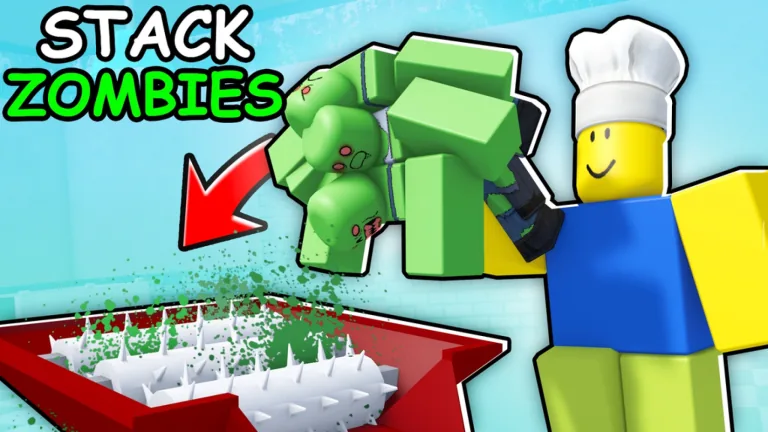
The indoor spike machine — knock zombies onto it to stack trap damage with melee attacks, the highest early-game DPS amplifier in Bake or Die.
Quick answer: diner defense in 3 steps
Single funnel. Barricade every entry except one — makes turrets and melee 2× more effective.
Auto Turret at the choke + spike machine inside. Turret handles range, spike machine handles anything that slips through.
Protect the generator. Generator down = turrets off = wipe. Carry an Old Battery from Day 4 onward.
Diner defense is the night-phase system most new players get wrong. The instinct is to fight
everywhere at once — it loses every time past Night 3. Veterans know the night is about
geometry: a clean single-funnel diner with two Auto Turrets
and an intact generator survives twice as long as a better-armed player defending three openings.
This guide covers everything that matters: funnel setup, turret placement, generator protection,
Old Battery use, class roles, wall repair budget, and how the new
Exterminator class (added June 19, 2026) changes the defense meta.
June 23, 2026 — game snapshot
Roblox API confirms the game last updated June 19, 2026 (Exterminator class update — 239.4M visits, 22.7k concurrent).
The Old Battery mechanic is documented across multiple guides (PGG, Games.GG, AllThings.how), and the core
defense advice follows the patch notes through May 2, 2026.
The 5 diner defense priorities
Single-funnel geometry. Block every entry except one — front door is standard. Barricade all windows and the back door before Night 1 starts.
Auto Turret at the funnel entrance. 1-2 turrets covering the chokepoint handle the bulk of nightly zombie volume passively while you bake or repair.
Spike machine combat position. Stand on the indoor spike machine — trap damage stacks with melee, doubling effective DPS per swing.
Generator alive at all costs. Generator powers the turrets. Losing it cuts turret DPS to zero. Repair the generator-side wall first, and carry an Old Battery.
End-of-day wall sweep. Every day, walk the perimeter with a repair hammer. Damage compounds — a 50% wall on Night 2 is a dead wall on Night 4.
Map geometry — where to fight each night
The diner has four points of entry: the front door, two side windows, and the back door near the generator alcove.
The single biggest survival upgrade is to barricade the three secondary entries and force zombies to queue through the
front door. This converts the night phase from a multi-front chaos defense into a predictable damage funnel.
Entry point
Action
Reason
Front door
Leave open — this is your funnel
Turrets and spike machine both cover this line
Side windows (×2)
Barricade both
Stops zombies flanking the spike machine position
Back door (generator alcove)
Barricade + second turret inside
Generator is the highest-value target; second turret here is non-negotiable from Night 5 onward
Inside the diner, two combat anchor positions matter:
the spike machine (best DPS amplifier, covers the funnel exit) and the
generator alcove (must stay alive, assign your support player here from Night 5+).
Auto Turret placement guide
The Auto Turret is obtained via NPC rescue blueprint. Each turret
consumes ammo from the Gunsmith — budget one full clip per night minimum or it goes silent mid-wave.
The Technician class gets a free Auto Turret at Level 2 and can craft
the Advanced variant at Level 3 (pro wrench lets you reposition both).
Turret 1 — Funnel entrance
Face inward toward the diner interior. Kills incoming zombies before they reach your spike machine position. The first turret you should place, ideally before Night 3.
Priority: High — covers the main damage lane
Turret 2 — Generator alcove
Cover the back-door approach. Zombies that bypass the front funnel (boss spawns, flankers) go down before damaging the generator. Non-negotiable from Night 5 onward.
Priority: High from Night 5 — protects most critical asset
Ammo budget rule: Buy turret ammo every day before night starts, not during. Running dry mid-wave is the
most common avoidable loss condition. At minimum: 1 clip per turret per night. With Gunslinger class:
you can skip one refill every 3 nights (10% no-consume proc at Level 2).
Generator — the most important structure
The generator at the back of the diner powers turrets and lights. If zombies reach it and bring it down,
both turrets stop firing immediately. This almost always causes a wipe by Night 6+.
How to fix a dead generator: Old Battery
When the generator loses power, you need an Old Battery to recharge it. Old Batteries spawn
on the map during day phases — check near abandoned houses, cars, and outbuildings on the road.
Using an Old Battery instantly restores generator power, reactivating turrets for that night.
Rule: From Day 4 onward, always carry at least one Old Battery in your inventory
before night starts. A generator failure mid-wave without a battery means fighting the rest of the night
with no turrets — survivable Night 1-3, fatal Night 6+.
Scenario
Action
Outcome
Generator healthy
Repair generator-side wall first each day
Turrets stay online all night
Generator low health
Repair immediately + place second turret inside back door
Buys time even if generator takes a hit
Generator destroyed mid-wave
Use Old Battery immediately
Turrets reactivate — night survivable
Generator destroyed, no battery
Pull all players to funnel, no turrets
High risk — usually wipes Night 6+
Spike machine — stacking DPS
The indoor spike machine is a floor trap that deals damage to every zombie standing on it.
Standing on the spike machine yourself during combat stacks trap damage with your melee swings
— the most cost-efficient DPS setup in the early game, requiring no ammo and no class investment.
Position: stand on the spike machine facing the funnel exit. Zombies walk in, take trap ticks, and your melee connects before they reach you.
Best partner: the Gladiator class — Blood Frenzy stacks apply on every spike machine kill, building melee damage rapidly during long waves.
Bad partner: Bombastica at the spike machine — explosive splash can interrupt the tight funnel geometry. Bombastica works better at range from the diner entrance.
Wall repair budget by night
Wall damage compounds across nights. The repair cost scales with total accumulated damage, not per-night damage —
skipping repairs on Night 2 makes Night 3 repair cost 1.5–2× higher. Budget repair time into every day phase.
Repairman class note: D-tier because the game's baseline repair system is already cheap and fast.
Any class with a hammer can repair quickly. Save nuggets for Technician or Juggernaut instead.
Team roles for diner defense
Funnel Bruiser
Best class: Gladiator (S-tier, 75 nuggets) or Juggernaut (B-tier, 30 nuggets budget).
Stands on the spike machine, soaks zombie aggro at the funnel exit, stacks melee + trap damage. Blood Frenzy (Gladiator) makes Night 7+ waves much cleaner.
Position: spike machine indoors
Ranged DPS
Best class: Gunslinger (S-tier, 65 nuggets) or Bombastica (S-tier, 250 nuggets).
Holds the funnel from the diner interior, covers turret blind spots, and takes boss-damage windows. Bombastica's Kaboom Cannon clears stacked zombie packs.
Position: diner interior facing funnel
Support / Defense
Best class: Technician (B-tier, ~45 nuggets) or Doctor (A-tier, 75 nuggets).
Technician: sets traps, manages turret ammo, repositions with Pro Wrench (Level 3). Doctor: heals between waves, revives, passive night HP regen. The role that decides Night 10+.
Position: generator alcove / perimeter
New: Exterminator class synergy (June 19, 2026)
The Exterminator class was added June 19, 2026 via an official Roblox event. Here is how its
poison perks fit a diner defense:
Exterminator in diner defense
Exterminator's poison mechanic — +50% poison strength at Level 1, spread-on-death at Level 2, +50% damage to poisoned targets at Level 3 — fits the funnel strategy well:
poison a zombie pack at the choke, let them spread poison as they die, and the Level 3 bonus amplifies every follow-up hit.
Mid-game pick
Night-by-night defense milestones
Night range
Key unlock
Defense setup
Main risk
1-2
Spike machine available
Single funnel + melee on spike machine
Barricade not up in time
3-4
First Auto Turret from NPC rescue
Funnel + 1 turret + spike machine position
Turret ammo running dry
5-6
Evil Chicken boss spawns
2 turrets (front + generator) + full perimeter repaired
Generator breach from boss aggro
7-10
Technician Level 3 → Pro Wrench
Repositioned traps, Advanced Turret, Old Battery stockpile
Wall compound damage from missed repairs
11+
Sewers area unlocked
Full 2-turret + Old Battery + daily repair + class role split
Multi-boss nights with 2 simultaneous boss types
Common defense mistakes
Leaving 2+ entrances open. Multi-front fights split turret DPS and melee attention — zombie volume overwhelms you by Night 5.
Forgetting to buy turret ammo. A turret without ammo is furniture. Buy ammo every day before night, not during.
Ignoring the generator-side wall. Players focus on the funnel wall and forget the back. One Night 6 boss breakthrough ends the run.
No Old Battery. Generator failures happen. An Old Battery is 30 seconds of map exploration on Day 4 that saves the entire night.
Buying Repairman for repairs. Repairman is D-tier. Any class with a hammer repairs at near-Repairman speed. Those 20 nuggets go to Juggernaut instead.
Standing away from the spike machine. Fighting in open space wastes the trap DPS multiplier. The spike machine is free damage — use it every night.
Diner defense — FAQ
How do you defend the diner in Bake or Die?
Barricade everything except one entrance (the front door). Place 1-2 Auto Turrets at that funnel choke. Stand on the spike machine inside for stacked trap + melee DPS. Keep the generator alive at the back — carry an Old Battery from Day 4 onward. Repair all walls at the end of every day phase.
What does the generator do?
Powers Auto Turrets and lights during night phases. Losing the generator disables all turrets simultaneously — survivable Night 1-3, fatal Night 6+. Protect it with a second turret at the back door and always repair the generator-side wall first.
How do you fix the generator with an Old Battery?
Find an Old Battery on the map during the day phase (look near houses and abandoned vehicles). When the generator loses power, use the Old Battery from your inventory to instantly restore it. Always carry one spare from Day 4 onward.
What is the spike machine and how does it work?
A floor trap inside the diner that deals damage to zombies standing on it. Stand on it yourself during combat — your melee swings stack with the trap damage, roughly doubling DPS per hit. Position yourself facing the funnel exit so zombies walk directly onto it.
Does wall damage carry over between nights?
Yes. Bake or Die walls keep accumulated damage across nights. A wall at 50% on Night 2 will fail faster on Night 3. Repair every day — prioritize funnel side first, then the generator-alcove wall.
Which class is best for diner defense?
Technician (B-tier, ~45 nuggets) is the dedicated defense class — free Auto Turret at Level 2, Pro Wrench to reposition at Level 3. Juggernaut (30 nuggets) is the best budget front-line tank. Exterminator (added June 19, 2026) adds poison debuffs to the funnel.
How many Auto Turrets should I use?
One at the funnel entrance, one at the generator back door. Two turrets is the standard Night 5+ setup. From Night 10+, Technician's Advanced Auto Turret and Pro Wrench let you run repositionable traps as a third layer.
Last checked: 2026-06-23. Game last updated: June 19, 2026 (Exterminator update — 239.4M visits, 22.7k concurrent).